Grow Younger, Live Longer

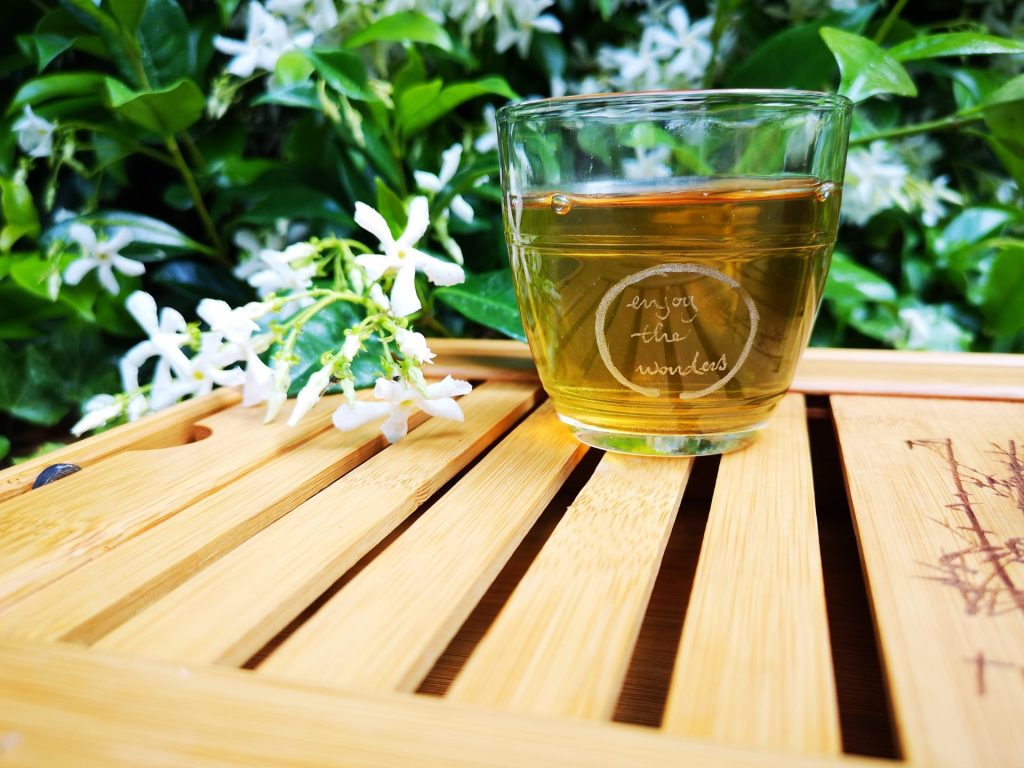
Looking for a natural way to boost your health and potentially slow down the hands of time? Grab a cup of green tea and get ready to be amazed!
A recent study published in Scientific Reports1Sohn, I., Shin, C. & Baik, I. Associations of green tea, coffee, and soft drink consumption with longitudinal changes in leukocyte telomere length. Sci Rep 13, 492 (2023). https://doi.org/10.1038/s41598-022-26186-y Source suggests that your daily cup of green tea might do more than just wake you up in the morning! The study revealed that regular green tea consumption may help slow telomeres’ shortening, which is one of the hallmarks of aging. The study followed over 1,900 middle-aged and older Korean men and women for six years and analyzed the association between changes in telomere length and their consumption of soft drinks, coffee, and tea.
The results showed that individuals who consumed more green tea had less shortening of telomeres, while no significant associations were found for other beverages. This association was found to be more significant for individuals under the age of 65.
While more research is needed to confirm these findings for people of different ages and ethnicities, it’s exciting to think that something as simple as a cup of tea could have such positive effects on our health.
Green tea’s potential health benefits can be attributed to the presence of a powerful compound called epigallocatechin gallate (EGCG). EGCG is a type of catechin, a natural plant compound with strong antioxidant and anti-inflammatory properties. Among catechins, EGCG is the most abundant and biologically active component found in green tea.2 Nagle DG, Ferreira D, Zhou YD. Epigallocatechin-3-gallate (EGCG): chemical and biomedical perspectives. Phytochemistry. 2006 Sep;67(17):1849-55. doi: 10.1016/j.phytochem.2006.06.020. Epub 2006 Jul 31. PMID: 16876833; PMCID: PMC2903211. PubMed Source
If you’re curious to learn more about the hallmarks of aging and eager to discover practical daily strategies to address them, we invite you to delve into our article, “Why do we age? 14 Hallmarks of Aging.” Explore the mysteries of the aging process and unlock the secrets to promoting healthier aging in your own life.
Resources
- 1
- 2Nagle DG, Ferreira D, Zhou YD. Epigallocatechin-3-gallate (EGCG): chemical and biomedical perspectives. Phytochemistry. 2006 Sep;67(17):1849-55. doi: 10.1016/j.phytochem.2006.06.020. Epub 2006 Jul 31. PMID: 16876833; PMCID: PMC2903211. PubMed Source ↩︎