Grow Younger, Live Longer

In a nutshell
- Are you looking for ways to promote a long and healthy life? Adopting a longevity diet may be the answer.
- In this article, we’ll explore the traditional principles of a longevity diet—emphasizing balanced macronutrients, focusing on plant-based foods complemented by moderate amounts of lean protein, and the potential benefits of practices like intermittent fasting.
- We’ll also go beyond these principles to bring you up-to-date insights from the evolving field of longevity research. Specifically, we’ll highlight the latest knowledge on the roles of macronutrient ratios and protein in promoting longevity.
- Quality is key, so we’ll delve into the importance of minimizing processed foods and sugars while prioritizing organic options to reduce chronic disease risks and elevate your well-being.
Are you looking to live a long and healthy life? One way to achieve this is through a longevity diet. A longevity diet is a way of eating that promotes a long and healthy life by emphasizing the consumption of nutrient-dense foods, reducing caloric intake, and staying hydrated.
Extensive research for the last few decades has shown that what we eat and how we eat is critical for our life expectancy: it can make our life longer or shorter depending on our everyday choices.
Doctor Valter Longo, a professor of gerontology and biological sciences at the University of Southern California in Los Angeles, dedicated his life to studying the interconnection between nutrition, diseases, and longevity. The results of his studies are covered in his book “The Longevity Diet” where he compiled the main principles of a longevity diet.
In our efforts to promote healthy living, we have combined the principles described in Dr. Longo’s book with recent research in the field. Our list of 6 principles provides a concise yet comprehensive guide to optimizing nutrition and promoting longevity.
1. Golden ratio

The golden ratio is the recommended ratio of macronutrients that you should consume daily. Macronutrients are important because they give our body energy and help keep our body structure and systems functioning properly. There are three types of macronutrients: carbohydrates (including starches, sugar, and fiber), proteins, and fats, which are the building blocks of our meals.
Most health organizations recommend a daily intake of 45 to 65 percent of calories from carbohydrates, 20 to 35 percent from fats, and 10 to 35 percent from protein. The exact macronutrient ratio may depend on factors such as age, gender, and specific fitness objectives.
Let’s briefly outline how these variables come into play:
- Age: Research shows that metabolic requirements can change as we age. For instance, older adults might benefit from higher protein intake to prevent muscle wasting. Conversely, younger individuals may focus on a balanced distribution of macronutrients to aid in growth and development.
- Gender: Men and women have different metabolic rates and nutrient requirements. While the fundamental principles of a longevity diet apply to both sexes, the exact percentage of carbs, proteins, and fats may vary slightly. For example, women may require more iron, particularly during child-bearing years, which could slightly alter their optimal protein sources.
- Activity Levels: Physical activity plays a significant role in determining caloric and macronutrient needs. For example, individuals involved in strength training may require more protein for muscle repair and growth, while endurance athletes may need more carbohydrates for sustained energy.
A recent study found that the availability of macronutrient-rich food in a country (called “macronutrient supplies”) is a strong predictor of age-specific mortality.1 Senior AM, Nakagawa S, Raubenheimer D, Simpson SJ. Global associations between macronutrient supply and age-specific mortality. Proc Natl Acad Sci U S A. 2020 Dec 1;117(48):30824-30835. doi: 10.1073/pnas.2015058117. Epub 2020 Nov 16. Erratum in: Proc Natl Acad Sci U S A. 2021 Mar 2;118(9): PMID: 33199593; PMCID: PMC7720154. PubMed Source They found that the golden ratio that minimizes overall mortality consists of 45-60% of carbohydrates (mostly non-refined), 25-35% of fats (mostly plant-based), and 10-15% of protein (mostly plant-based). However, the study also noted that the absolute amount of specific macronutrients we eat (macronutrient intake) is more important than just the availability of these foods.
Studies on animals have provided further evidence to support these findings and have emphasized that the ratio of macronutrients in one’s diet is a more reliable predictor of lifespan than simply monitoring overall calorie intake. In fact, research suggests that diets with lower protein and higher carbohydrate content may be particularly advantageous for promoting longevity.2 Solon-Biet SM, McMahon AC, Ballard JW, Ruohonen K, Wu LE, Cogger VC, Warren A, Huang X, Pichaud N, Melvin RG, Gokarn R, Khalil M, Turner N, Cooney GJ, Sinclair DA, Raubenheimer D, Le Couteur DG, Simpson SJ. The ratio of macronutrients, not caloric intake, dictates cardiometabolic health, aging, and longevity in ad libitum-fed mice. Cell Metab. 2014 Mar 4;19(3):418-30. doi: 10.1016/j.cmet.2014.02.009. Erratum in: Cell Metab. 2020 Mar 3;31(3):654. PMID: 24606899; PMCID: PMC5087279. PubMed Source
So, a balanced intake of various macronutrients, rather than excluding any one type, can increase the chances of living a longer life. Furthermore, the balance of macronutrients varies across different stages of life.3 Senior AM, Nakagawa S, Raubenheimer D, Simpson SJ. Global associations between macronutrient supply and age-specific mortality. Proc Natl Acad Sci U S A. 2020 Dec 1;117(48):30824-30835. doi: 10.1073/pnas.2015058117. Epub 2020 Nov 16. Erratum in: Proc Natl Acad Sci U S A. 2021 Mar 2;118(9): PMID: 33199593; PMCID: PMC7720154. PubMed Source During youth (under the age of 25), consuming an equal amount of fat and carbohydrates (about 40-45% each) may be crucial. Whereas in older age (especially after 55), it may be more beneficial to lower fat intake in favor of increased carbohydrate consumption, making a ratio closer to 11% protein, 67% carbohydrates, and 22% fats.
It’s important to note that the field of longevity research offers diverse perspectives on macronutrient’s, especially protein, role in extending lifespan. While one camp, largely based on animal studies, advocates for restricting protein intake as a pathway to longevity, another group underscores the importance of adequate protein, especially in older age, for maintaining muscle mass and overall health. In the last section, we’ll explore an alternative viewpoint on macronutrients ratio, backed by the latest scientific evidence.
2. Plant-based food

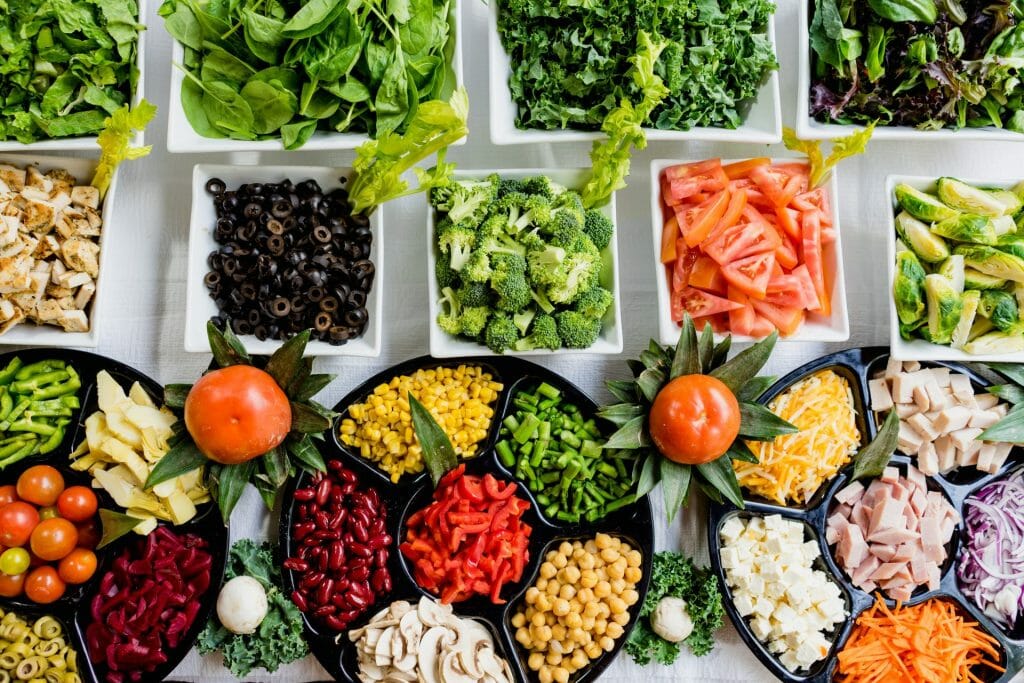
A longevity diet emphasizes the consumption of plant-based foods, which are rich in nutrients, antioxidants, and fiber and can help to reduce the risk of chronic diseases such as heart disease, cancer, and diabetes.
People who eat a healthy plant-based diet have about a 20% lower risk of dying from heart disease and around a 10% lower risk of dying from any cause compared to people who don’t eat a healthy plant-based diet.4 Kim H, Caulfield LE, Garcia-Larsen V, Steffen LM, Coresh J, Rebholz CM. Plant-Based Diets Are Associated With a Lower Risk of Incident Cardiovascular Disease, Cardiovascular Disease Mortality, and All-Cause Mortality in a General Population of Middle-Aged Adults. J Am Heart Assoc. 2019 Aug 20;8(16):e012865. doi: 10.1161/JAHA.119.012865. Epub 2019 Aug 7. PMID: 31387433; PMCID: PMC6759882. PubMed Source
Studies have also shown that a plant-based diet can reduce the risk of chronic diseases, including cardiovascular diseases and cancer, by up to 50%.5 Tuso PJ, Ismail MH, Ha BP, Bartolotto C. Nutritional update for physicians: plant-based diets. Perm J. 2013 Spring;17(2):61-6. doi: 10.7812/TPP/12-085. PMID: 23704846; PMCID: PMC3662288. PubMed Source 6 Satija A, Hu FB. Plant-based diets and cardiovascular health. Trends Cardiovasc Med. 2018 Oct;28(7):437-441. doi: 10.1016/j.tcm.2018.02.004. Epub 2018 Feb 13. PMID: 29496410; PMCID: PMC6089671. PubMed Source 7Thompson AS, Tresserra-Rimbau A, Karavasiloglou N, Jennings A, Cantwell M, Hill C, Perez-Cornago A, Bondonno NP, Murphy N, Rohrmann S, Cassidy A, Kühn T. Association of Healthful Plant-based Diet Adherence With Risk of Mortality and Major Chronic Diseases Among Adults in the UK. JAMA Netw Open. 2023 Mar 1;6(3):e234714. doi: 10.1001/jamanetworkopen.2023.4714. PMID: 36976560; PMCID: PMC10051114. PubMed Source
3. Moderate intake of lean protein
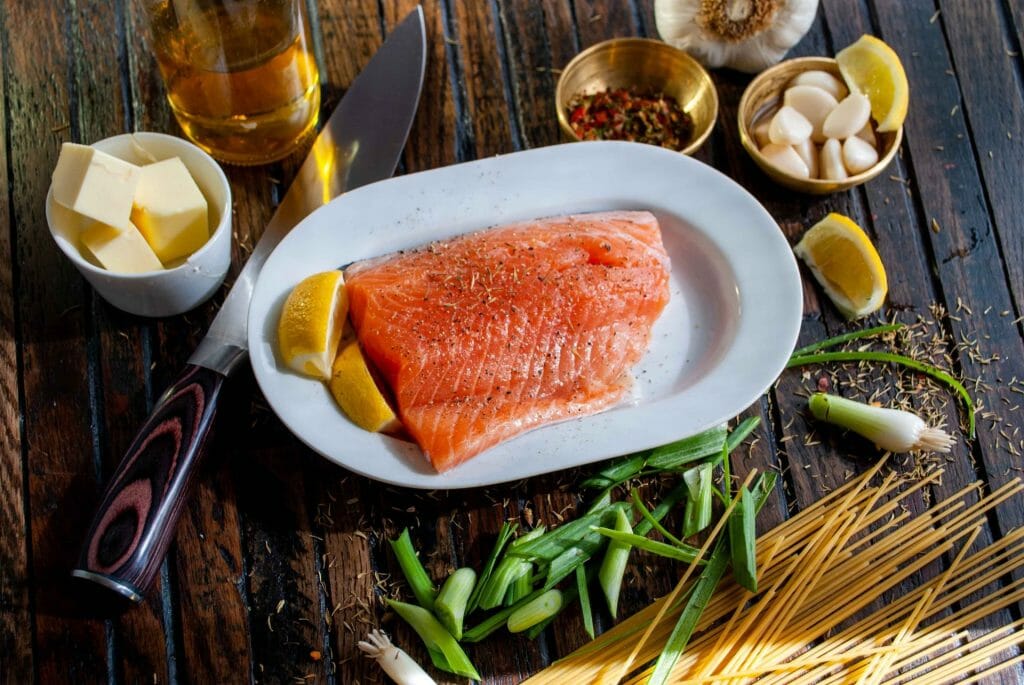
While a longevity diet emphasizes plant-based foods, it also includes moderate amounts of lean protein. Lean protein can help to support muscle growth, repair tissue, and maintain overall health.
However, it is important to choose lean protein sources such as fish, poultry, and low-fat dairy products and limit your intake of processed and red meats, which have been linked to an increased risk of chronic diseases such as cancer and heart disease.8 Hu FB. Protein, body weight, and cardiovascular health. Am J Clin Nutr. 2005 Jul;82(1 Suppl):242S-247S. doi: 10.1093/ajcn/82.1.242S. PMID: 16002829. PubMed Source
4. Limited intake of processed foods and added sugars

A longevity diet suggests limiting the intake of processed foods and added sugars. Processed foods are often high in calories, unhealthy fats, sodium, and added sugars, increasing the risk of chronic diseases such as heart disease, diabetes, and obesity.
Added sugars are another processed food component that should be limited in a longevity diet. High intake of added sugars has been linked to an increased risk of chronic diseases such as type 2 diabetes, heart disease, and obesity.9Malik VS, Hu FB. Sugar-Sweetened Beverages and Cardiometabolic Health: An Update of the Evidence. Nutrients. 2019 Aug 8;11(8):1840. doi: 10.3390/nu11081840. PMID: 31398911; PMCID: PMC6723421. PubMed Source
5. Emphasis on organic food

A longevity diet places considerable importance on the consumption of organic food. Organic foods are grown without the use of synthetic pesticides and fertilizers and are often free from genetically modified organisms (GMOs). Furthermore, organic food is believed to contain higher levels of nutrients compared to mass-produced, fertilized, and GMO foods. This is because conventional agriculture practices have led to soil degradation, stripping the soil—and by extension, the produce—of essential nutrients. Therefore, when you opt for organic food, you’re not just reducing exposure to harmful pesticides; you’re also choosing food that is more nutrient-dense.
Choosing organic food can help to reduce exposure to harmful chemicals and support sustainable agriculture practices. Studies suggest that organic food may reduce the risk of some chronic diseases, including allergies, being overweight, obesity, and some types of cancer.10 Mie A, Andersen HR, Gunnarsson S, Kahl J, Kesse-Guyot E, Rembiałkowska E, Quaglio G, Grandjean P. Human health implications of organic food and organic agriculture: a comprehensive review. Environ Health. 2017 Oct 27;16(1):111. doi: 10.1186/s12940-017-0315-4. PMID: 29073935; PMCID: PMC5658984. PubMed Source
6. Intermittent fasting and calorie restriction

The last principle of a longevity diet is intermittent fasting and calorie restriction. Studies have shown that caloric restriction can extend lifespan and reduce the risk of chronic diseases.11 Flanagan, Emily W et al. “Calorie Restriction and Aging in Humans.” Annual review of nutrition vol. 40 (2020): 105-133. PubMed Source But calorie restriction can be very challenging for many of us. Intermittent fasting can be a good alternative to this approach: it involves alternating periods of eating and fasting. There are many types of intermittent fasting and ways to do it, each of them has numerous health benefits.12 Mandal S, Simmons N, Awan S, Chamari K, Ahmed I. Intermittent fasting: eating by the clock for health and exercise performance. BMJ Open Sport Exerc Med. 2022 Jan 7;8(1):e001206. doi: 10.1136/bmjsem-2021-001206. PMID: 35070352; PMCID: PMC8744103. PubMed Source Consuming food less frequently and in smaller quantities has outstanding health benefits and life-prolonging effects. We describe the basics of intermittent fasting and calorie restriction in a separate piece.
The Importance of Protein: A Nuanced Perspective

While the core principles of a longevity diet focus on a balanced intake of macronutrients and an emphasis on plant-based foods, there is an evolving understanding around the role of protein, especially for those who are keen on optimizing for longevity. A growing body of evidence suggests that the question of protein intake is far more nuanced than initially thought.
The Protein Paradox in Longevity Research
A lot of the early research on dietary restriction and longevity emphasized the potential benefits of limiting protein intake. These conclusions were primarily derived from animal studies, often with species like nematodes and mice. For instance, research in animal models has shown that a low-protein, high-carbohydrate diet may offer life-extending benefits.13 Kitada, Munehiro et al. “The impact of dietary protein intake on longevity and metabolic health.” EBioMedicine vol. 43 (2019): 632-640. doi:10.1016/j.ebiom.2019.04.005 PubMed Source
However, these findings present something of a “protein paradox” when translated to human nutrition. Unlike mice or nematodes, humans need to consider the long-term health of their muscles, particularly as they age. Muscle mass and strength—often referred to collectively as “muscle health”—are vital for mobility, balance, and overall quality of life. Declining muscle health is a significant risk factor for falls, fractures, and loss of independence among older adults.14 Metter, E Jeffrey et al. “Skeletal muscle strength as a predictor of all-cause mortality in healthy men.” The journals of gerontology. Series A, Biological sciences and medical sciences vol. 57,10 (2002): B359-65. doi:10.1093/gerona/57.10.b359 PubMed Source
The Crucial Role of Protein in Human Longevity
The role of protein in maintaining and building muscle mass can’t be overstated. In humans, adequate protein intake is essential for optimal muscle function. This is particularly true for older adults who are at greater risk of sarcopenia—a condition characterized by the loss of muscle mass and function, often exacerbated by insufficient protein and overall caloric intake.
The general consensus among geriatricians and nutritionists is that older adults should consume more protein than currently recommended, aiming at 1.2 g/kg/day.15 Baum, Jamie I et al. “Protein Consumption and the Elderly: What Is the Optimal Level of Intake?.” Nutrients vol. 8,6 359. 8 Jun. 2016, doi:10.3390/nu8060359 PubMed Source While plant-based proteins can be part of this equation, animal-based proteins are generally more effective at stimulating muscle protein synthesis due to their complete amino acid profiles.
Striking a Balance: Protein for Longevity and Muscle Health
So, where does this leave us on the role of protein in a longevity-oriented diet? The answer is in finding a balance. It’s crucial to integrate sufficient protein into one’s diet to maintain muscle health, especially in older adults. Many longevity experts advocate for higher than RDA amounts of protein, aiming at 1,6-2,2g/kg/day.
The trick is to increase your protein intake without significantly increasing the risk for other chronic conditions like heart disease and cancer, often associated with high consumption of animal-based proteins. This may include a balanced approach involving the incorporation of both plant-based and high-quality animal-based proteins, with a particular emphasis on fish, poultry, and lean cuts of meat. Combine this with strength training exercises to further enhance muscle health and thereby contribute to a holistic strategy for healthy aging.
Recap and final thoughts
In light of our expanded discussion, it’s clear that a longevity diet encompasses more than just broad principles; it also considers the nuanced views from longevity experts on specific macronutrients like protein. The core tenets still stand: a balanced intake of macronutrients, a focus on plant-based foods, moderate amounts of lean protein, and a limited intake of processed foods and added sugars. Choosing organic foods from trusted sources remains advisable, and for those willing to take an extra step, intermittent fasting or calorie restriction can be beneficial.
While these principles provide a strong foundation, it’s crucial to recognize that longevity is a complex field with evolving research. The role of protein, for instance, is still a topic of ongoing debate among experts. Therefore, adopting a longevity diet should be a personalized experience, taking into account factors like age, sex, and activity level.
References
- 1Senior AM, Nakagawa S, Raubenheimer D, Simpson SJ. Global associations between macronutrient supply and age-specific mortality. Proc Natl Acad Sci U S A. 2020 Dec 1;117(48):30824-30835. doi: 10.1073/pnas.2015058117. Epub 2020 Nov 16. Erratum in: Proc Natl Acad Sci U S A. 2021 Mar 2;118(9): PMID: 33199593; PMCID: PMC7720154. PubMed Source ↩︎
- 2Solon-Biet SM, McMahon AC, Ballard JW, Ruohonen K, Wu LE, Cogger VC, Warren A, Huang X, Pichaud N, Melvin RG, Gokarn R, Khalil M, Turner N, Cooney GJ, Sinclair DA, Raubenheimer D, Le Couteur DG, Simpson SJ. The ratio of macronutrients, not caloric intake, dictates cardiometabolic health, aging, and longevity in ad libitum-fed mice. Cell Metab. 2014 Mar 4;19(3):418-30. doi: 10.1016/j.cmet.2014.02.009. Erratum in: Cell Metab. 2020 Mar 3;31(3):654. PMID: 24606899; PMCID: PMC5087279. PubMed Source ↩︎
- 3Senior AM, Nakagawa S, Raubenheimer D, Simpson SJ. Global associations between macronutrient supply and age-specific mortality. Proc Natl Acad Sci U S A. 2020 Dec 1;117(48):30824-30835. doi: 10.1073/pnas.2015058117. Epub 2020 Nov 16. Erratum in: Proc Natl Acad Sci U S A. 2021 Mar 2;118(9): PMID: 33199593; PMCID: PMC7720154. PubMed Source ↩︎
- 4Kim H, Caulfield LE, Garcia-Larsen V, Steffen LM, Coresh J, Rebholz CM. Plant-Based Diets Are Associated With a Lower Risk of Incident Cardiovascular Disease, Cardiovascular Disease Mortality, and All-Cause Mortality in a General Population of Middle-Aged Adults. J Am Heart Assoc. 2019 Aug 20;8(16):e012865. doi: 10.1161/JAHA.119.012865. Epub 2019 Aug 7. PMID: 31387433; PMCID: PMC6759882. PubMed Source ↩︎
- 5Tuso PJ, Ismail MH, Ha BP, Bartolotto C. Nutritional update for physicians: plant-based diets. Perm J. 2013 Spring;17(2):61-6. doi: 10.7812/TPP/12-085. PMID: 23704846; PMCID: PMC3662288. PubMed Source ↩︎
- 6Satija A, Hu FB. Plant-based diets and cardiovascular health. Trends Cardiovasc Med. 2018 Oct;28(7):437-441. doi: 10.1016/j.tcm.2018.02.004. Epub 2018 Feb 13. PMID: 29496410; PMCID: PMC6089671. PubMed Source ↩︎
- 7Thompson AS, Tresserra-Rimbau A, Karavasiloglou N, Jennings A, Cantwell M, Hill C, Perez-Cornago A, Bondonno NP, Murphy N, Rohrmann S, Cassidy A, Kühn T. Association of Healthful Plant-based Diet Adherence With Risk of Mortality and Major Chronic Diseases Among Adults in the UK. JAMA Netw Open. 2023 Mar 1;6(3):e234714. doi: 10.1001/jamanetworkopen.2023.4714. PMID: 36976560; PMCID: PMC10051114. PubMed Source ↩︎
- 8Hu FB. Protein, body weight, and cardiovascular health. Am J Clin Nutr. 2005 Jul;82(1 Suppl):242S-247S. doi: 10.1093/ajcn/82.1.242S. PMID: 16002829. PubMed Source ↩︎
- 9Malik VS, Hu FB. Sugar-Sweetened Beverages and Cardiometabolic Health: An Update of the Evidence. Nutrients. 2019 Aug 8;11(8):1840. doi: 10.3390/nu11081840. PMID: 31398911; PMCID: PMC6723421. PubMed Source ↩︎
- 10Mie A, Andersen HR, Gunnarsson S, Kahl J, Kesse-Guyot E, Rembiałkowska E, Quaglio G, Grandjean P. Human health implications of organic food and organic agriculture: a comprehensive review. Environ Health. 2017 Oct 27;16(1):111. doi: 10.1186/s12940-017-0315-4. PMID: 29073935; PMCID: PMC5658984. PubMed Source ↩︎
- 11Flanagan, Emily W et al. “Calorie Restriction and Aging in Humans.” Annual review of nutrition vol. 40 (2020): 105-133. PubMed Source ↩︎
- 12Mandal S, Simmons N, Awan S, Chamari K, Ahmed I. Intermittent fasting: eating by the clock for health and exercise performance. BMJ Open Sport Exerc Med. 2022 Jan 7;8(1):e001206. doi: 10.1136/bmjsem-2021-001206. PMID: 35070352; PMCID: PMC8744103. PubMed Source ↩︎
- 13Kitada, Munehiro et al. “The impact of dietary protein intake on longevity and metabolic health.” EBioMedicine vol. 43 (2019): 632-640. doi:10.1016/j.ebiom.2019.04.005 PubMed Source ↩︎
- 14Metter, E Jeffrey et al. “Skeletal muscle strength as a predictor of all-cause mortality in healthy men.” The journals of gerontology. Series A, Biological sciences and medical sciences vol. 57,10 (2002): B359-65. doi:10.1093/gerona/57.10.b359 PubMed Source ↩︎
- 15Baum, Jamie I et al. “Protein Consumption and the Elderly: What Is the Optimal Level of Intake?.” Nutrients vol. 8,6 359. 8 Jun. 2016, doi:10.3390/nu8060359 PubMed Source ↩︎