Grow Younger, Live Longer

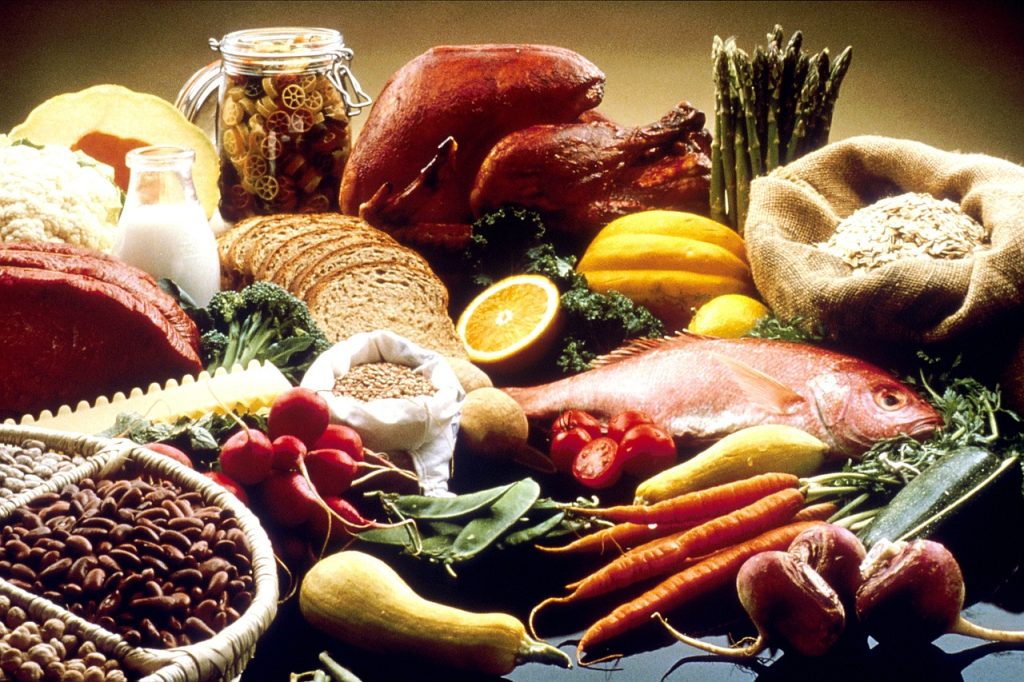
Are you aware that the type of food you consume could directly influence the trillions of microbes living in your gut, impacting your energy balance and overall health? Discover how a specific diet, called the Microbiome Enhancer Diet, could potentially reshape your gut health and boost your metabolism.
A study recently published in Nature Communications has provided novel insights into the intricate relationship between diet, the gut microbiome, and energy balance.1 Corbin KD, Carnero EA, Dirks B, Igudesman D, Yi F, Marcus A, Davis TL, Pratley RE, Rittmann BE, Krajmalnik-Brown R, Smith SR. Host-diet-gut microbiome interactions influence human energy balance: a randomized clinical trial. Nat Commun. 2023 May 31;14(1):3161. doi: 10.1038/s41467-023-38778-x. PMID: 37258525; PMCID: PMC10232526. Source The research was led by Karen D. Corbin at the AdventHealth Translational Research Institute and examined the impacts of different diets on the body and gut microbes’ competition for calories.
The researchers recruited 17 healthy men and women for the clinical trial. Each participant was subjected to two contrasting diets over a total period of 44 days: a typical Western Diet (WD), high in processed foods, and a specially formulated Microbiome Enhancer Diet (MBD), rich in fiber. The diets were followed by the participants for 22 days each, with researchers providing all meals and controlling physical activity levels.
Half of their time on each diet was spent in a metabolic ward where every calorie they consumed was tracked. For six days of each diet phase, the participants resided in an airtight room known as a metabolic chamber, which allowed the scientists to accurately measure how many calories the participants burned. Researchers also collected and analyzed the participants’ bowel movements to evaluate energy and bacteria levels in their feces.
The research found that the Microbiome Enhancer Diet (MBD) led to an additional daily loss of 116 kcals through feces, resulting in less metabolizable, or usable, energy for the body. Even with this change, the participants didn’t report any increase in hunger or changes in food intake. This significant finding emphasizes the complex relationship between our diet, gut microbiome, and energy balance.
Despite having the same calorie content, the Microbiome Enhancer Diet feeds the gut microbes, whereas the Western Diet gets fully absorbed by the body.
Additionally, the MBD caused an increase in bacterial biomass, led to changes in microbial diversity, and resulted in an increase in fermentation products. The diet also brought about significant changes in the host’s digestive system. These changes highlight the vital role that diet plays in managing our gut microbiome and, as a result, our energy balance.
The gut microbiome plays a pivotal role in our overall health, affecting everything from digestion and nutrient absorption to immune function. Recent research even suggests a strong link between a healthy microbiome and longevity. A diverse and balanced microbiome can help protect against certain diseases, promote better metabolic health, and may potentially extend our lifespan.
In conclusion, the study highlights the stark difference between the two diets studied. Despite containing the same number of calories, the Microbiome Enhancer Diet uniquely caters to the needs of our gut microbiota, supplying it with vital nourishment. Conversely, a typical Western Diet allows complete digestion, directing all the energy towards the body. The study underscores the primary goal of the Microbiome Enhancer Diet: to promote a healthier and happier gut microbiome.
Resources
- 1Corbin KD, Carnero EA, Dirks B, Igudesman D, Yi F, Marcus A, Davis TL, Pratley RE, Rittmann BE, Krajmalnik-Brown R, Smith SR. Host-diet-gut microbiome interactions influence human energy balance: a randomized clinical trial. Nat Commun. 2023 May 31;14(1):3161. doi: 10.1038/s41467-023-38778-x. PMID: 37258525; PMCID: PMC10232526. Source ↩︎